If you have lived with IBS or chronic bloating, you know the pattern: the elimination diets that help for a while and then stop, the foods that were fine last month and trouble you now, the sense that your digestion has a mind of its own.
Ayurveda has been studying this kind of digestive disturbance for thousands of years — and its answer begins not with a list of foods to avoid, but with a single concept that changes everything: agni, the digestive fire.
How Ayurveda Understands Digestive Trouble
There is a principle at the heart principle at the heart of the tradition: when agni — the digestive fire — is strong, the body is well; when agni is disturbed, every other system eventually follows. This is why Ayurvedic work with IBS, bloating, and chronic gut issues almost always begins at the level of agni, not at the level of the symptom.
When agni is functioning well, food is digested cleanly, nutrients are absorbed, and waste is eliminated on schedule. When agni is weak, irregular, or excessive, food is not fully processed. The residue that builds — what Ayurveda calls ama — travels through the system, disturbs the channels, and produces the gas, bloating, irregularity, and discomfort that define so many digestive complaints.
Each dosha disturbs digestion in its own way. Vata-type digestion tends toward bloating, gas, constipation alternating with loose stools, irregular appetite, and sensitivities that seem to shift from week to week — this is the pattern most IBS sufferers recognise. Pitta-type digestion runs hot, with acid reflux, burning, loose stools, and inflammation. Kapha-type digestion is slow and heavy, with sluggish elimination and a sense of weight after meals.
This is why two people with the same IBS diagnosis can need entirely opposite advice. One person's healing food is another person's trigger. Generic gut-health protocols fail so often precisely because they ignore this — they treat every gut as the same gut. Ayurveda begins by asking what kind of digestive disturbance is yours.
The Patterns Behind IBS and Bloating
Chronic digestive trouble rarely shows up alone. These are the connected patterns Ayurveda addresses together.
- IBS and Irregular Bowel Patterns Constipation, loose stools, or the unpredictable alternation between the two. Abdominal discomfort that has been medically investigated without a clear cause. Often a Vata-driven pattern, and one where the constitutional depth of Ayurvedic understanding shows its real value.
- Chronic Bloating and Gas: The bloating that no probiotic or elimination diet has fully resolved, the distension after meals, the discomfort that builds through the day. Addressed at the level of agni and the specific foods, combinations, and rhythms that aggravate or soothe your digestion.
- Food Sensitivities That Keep Growing: The lengthening list of foods you can no longer tolerate — gluten, dairy, FODMAPs, nightshades. Ayurveda understands these not always as fixed allergies, but often as signs of weakened agni that can be gradually rebuilt.
- Acid Reflux and Burning: Heartburn, reflux, and burning sensations — understood in Ayurveda as a Pitta-related pattern of excess digestive heat moving in the wrong direction. Supported through cooling foods, meal timing, and specific herbal preparations.
- Stress-Related Digestion: Digestion that worsens with stress, deadlines, or difficult periods. Ayurveda has always understood the gut and the nervous system as deeply connected — which is why digestive work and stress work so often go together.
- Energy and Skin: Connected to the Gut The fatigue, brain fog, or skin breakouts that travel alongside digestive trouble. In Ayurveda, these are not separate concerns — when digestion is disturbed, the effects ripple outward through the whole body.
The Ayurvedic Approach to Digestion
Understanding your specific dosha pattern, the state of your agni, your full digestive history, and the way your gut behaves day to day. From there, the work typically includes several layers.
- Dietary work is central — but it is rarely about restriction. Ayurvedic dietary guidance is about alignment: eating in a way that suits your constitution, your current state, and the season. This means warm, freshly cooked foods that are easy to digest; attention to how and when you eat, not only what; food combinations that support rather than burden agni; and the gradual rebuilding of digestive capacity so that tolerance widens over time rather than narrowing.
- Meal rhythm is one of Ayurveda's most powerful and overlooked interventions. The timing of meals, the spacing between them, eating the largest meal at midday when digestion is strongest — these rhythmic adjustments often shift digestion more than any single food change.
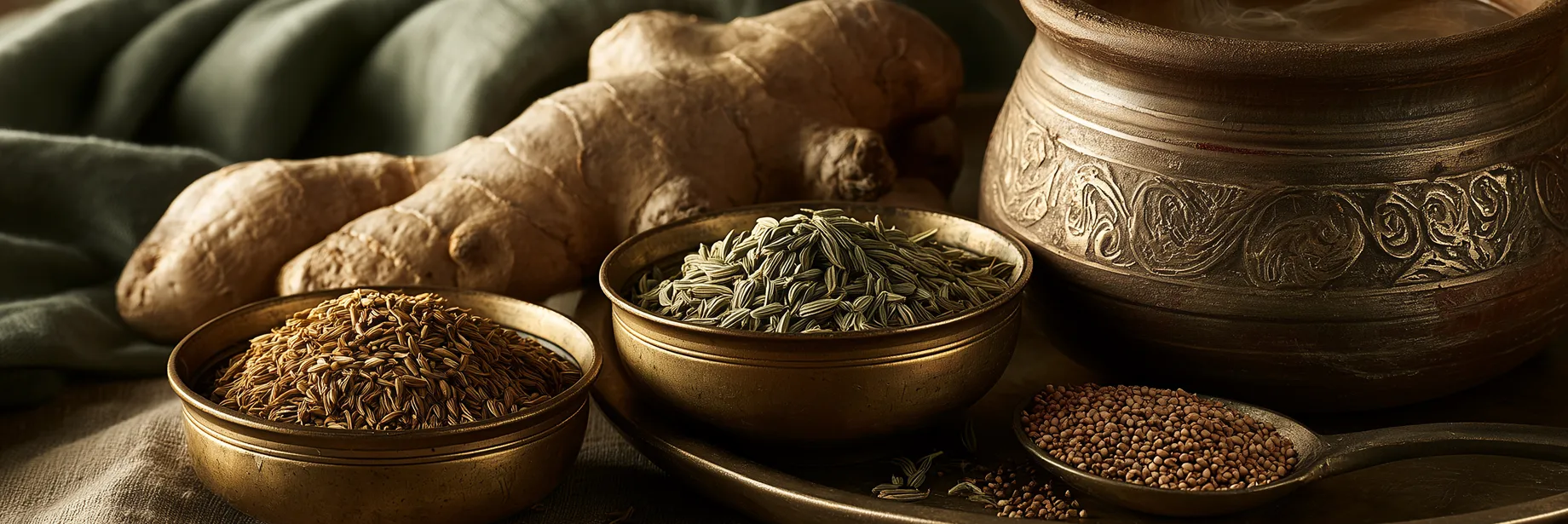
- Herbal support draws on traditional Ayurvedic formulations long used for digestion — among them triphala, ajwain, fennel, cumin, ginger, and hingvashtak — selected for your specific pattern. These are recommendations, not prescriptions, chosen for your individual picture.
- Lifestyle and stress work matter because the gut and nervous system are inseparable. When the body is in chronic stress, agni is disturbed, and no amount of dietary precision fully resolves the picture. Ayurvedic work addresses both layers together.
Most people working with Ayurveda for digestion notice the first shifts — less bloating, more regular elimination, steadier appetite — within four to eight weeks. Deeper restoration of agni and resolution of long-standing IBS or sensitivity patterns typically unfolds over three to six months. Digestion is patient work, and it rewards consistency.
This is one of the areas where Vaidya Vaishali's practice runs deepest.
You can read more about how she works with Digestive Health & Gut Balance.
Digestive Health & Gut Balance
Working Alongside Your Doctor
Ayurvedic support for digestive issues is designed to complement, never replace, medical care. If you have been diagnosed with IBS, IBD, GERD, or another gastrointestinal condition, are taking medication for digestion, or are being investigated for symptoms that have not yet been explained, please continue working with your physician or gastroenterologist.
Many clients find that Ayurvedic dietary, lifestyle, and herbal work strengthens the foundation their medical care rests on — and physicians often welcome the dietary and lifestyle support as a complement to medical management. Vaidya Vaishali does not advise stopping or adjusting any medication; those decisions remain between you and your prescribing physician. If your digestive symptoms are sudden, severe, or accompanied by warning signs such as unexplained weight loss or bleeding, please seek medical evaluation promptly — these require a doctor's attention, not wellness support alone.
Where to Begin
If you recognise your own experience in this article, the starting point is understanding your specific pattern. IBS and bloating look different in every person, and the Ayurvedic approach depends entirely on which dosha imbalances are driving yours.
A consultation with Vaidya Vaishali begins with a comprehensive picture of your constitution, your digestive history, your daily patterns, and your goals — and from there, a personalised wellness protocol shaped to your body.